|
|
. . 
|
||||||
|
October
19, 2005
© 1998
- 2005 Copyright & |
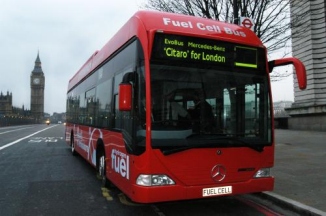
The trials have given the developers of the fuel-cell stack valuable in-formation for the extension of fuel-cell lifetimes. The performance of the current generation of stacks is well above expectations: more than 2,000 operating hours without any power losses. This brings fuel-cell lifetimes even closer to those of conventional gasoline and diesel engines. The quiet hum of progress These clean city buses run very quietly. A white cloud of steam from their roofs betrays their drive system. The principle of fuel-cell drive is simple, highly efficient, and is becoming ever more practical for mobile applications. Fuel cells generate energy from the reaction between hydrogen and oxygen to create water. They work with a high degree of efficiency and emit only pure steam. A fuel-cell system with a power output of more than 200 kW and pres-surized gas bottles are installed on the vehicle’s roof. Hydrogen is used to generate electricity, which operates the 200 kW electric motor. The buses accommodate 70 passengers and have a range of about 200 kilometers. Their top speed is 80 kilometers per hour.
Optimal efficiency combined with good ride comfort DaimlerChrysler is a pioneer and leading player in the development of fuel cells for the automobile. More than ten years ago, the Group presented the world’s first fuel-cell vehicle – NECAR 1. Since then, the technology has been further developed with numerous concept vehicles. In addition to the 33 buses, 60 Mercedes-Benz A-Class “F-Cell” cars are in daily use with customers all over the world. In the United States, UPS delivers parcels with fuel-cell Sprinters; in Singapore, Tokyo, Germany and the United States, customers are testing the A-Class “F-Cell” in fleet use every day. In total, more than 100 Daimler-Chrysler fuel-cell vehicles are in use – more than from any other manufacturer. (Oct 18, 2005)
|
|||||