|
|
 |
 |
||||||
|
November 29, 2006 This Week:
© 1998 - 2006
Copyright & |
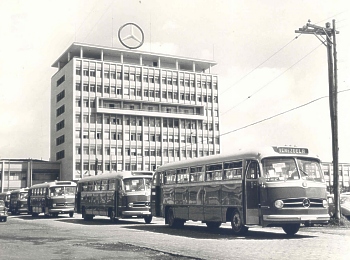
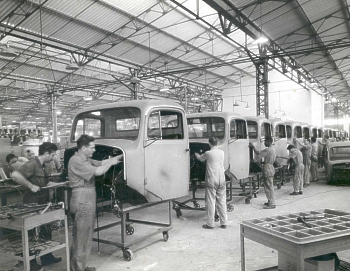
From the outset, production was focused on the L 312 truck, also known as the “Torpedo”. The model utilized an inline six-cylinder, indirect injection diesel engine, of 100 DIN horsepower (112hp-SAE). Bus production began two years later, with the introduction of the monoblock O 321 model, that received a similar engine, however with 110 hp-DIN (122 hp-SAE). Mercedes-Benz Technology: Pioneering Spirit The history of Mercedes-Benz in Brazil has always been characterized by a pioneering spirit. Unlike the majority of the national fleet of trucks and buses in 1950, the brand’s vehicles featured diesel engines – at that time less than 2% of the trucks circulating in Brazil were powered by diesel fuel. In 1956, with the manufacture of the first diesel engines made entirely in Brazil, the brand introduced and consolidated the use of diesel as a more efficient and profitable fuel for transportation of cargo and passengers. In 1998, Mercedes-Benz introduced the first electronically-controlled diesel engines produced in Brazil, available today in the entire product line of commercial vehicles. Mercedes-Benz was also responsible for the introduction of a wide range of other innovations in commercial vehicles, such as natural gas-powered engines, disk brakes for trucks, ABS and ASR brakes, the Top Brake system and Turbo Brake system, items that incorporate the key aspects of the brand’s worldwide experience. Today, the Brazilian unit is one of the DaimlerChrysler Truck Group’s center of competence for the development and production of bus chassis. On a worldwide level, it is also responsible for the design and development of the Accelo line of light-duty trucks. At its São Bernardo do Campo plant, DaimlerChrysler counts on a modern and advanced Center of Technological Development (CTD). Created in 1991, it is a pioneer in Brazil in the area of commercial ve-hicles and is the largest of its kind in all of Latin America. Moreover, it is the Mercedes-Benz’s largest technological development center out-side Germany. The CTD develops solutions for future projects and en-hancements for standard products, always taking into consideration the Brazilian conditions of vehicle usage. At present, the Mercedes-Benz line of trucks features light-duty Accelo models (since 2003), medium-duty and semi-heavy-duty Atego models (since 2004) and the extra-heavy-duty Axor (since 2005), products that count on cutting-edge technology for use in various applications. The line of bus chassis is represented by the O-500 family, which also comes in an articulated version since this year. In 1999, the passenger car factory was inaugurated in the city of Juiz de Fora in the state of Minas Gerais, which initially produced the A-Class, which at that time just had been introduced in Europe. Today, the facility produces the C-Class Sedan for export. As of first quarter 2007, it will focus on production of the C-Class Sports Coupe, destined mainly for export into European markets. (November 24, 2006)
|
||||||